HVAC Services Castro Valley, CA
O.S. Heating & Cooling provides HVAC services in Castro Valley, CA, when equipment runs. Still, rooms remain uncomfortable, airflow declines, controls become unreliable, or an aging system needs repair, maintenance, installation, or replacement.
- Home
- Castro Valley, CA

When Working Equipment Still Leaves Rooms Uncomfortable
HVAC services in Castro Valley, CA, are not limited to equipment that has stopped running. A furnace or air conditioner can start normally while damaged ducts, inadequate return airflow, inaccurate thermostat readings, or weak blower performance prevent conditioned air from reaching the intended rooms. O.S. Heating & Cooling investigates the difference between what the equipment produces and what occupants actually feel throughout the property.
An air conditioning service may focus on cooling output and moisture drainage, while a furnace service may require ignition, burner, or blower testing. Customers can also explore air conditioning services in Castro Valley, CA, heating services for Castro Valley properties, and nearby HVAC services in San Leandro, CA. As an HVAC company, we handle active breakdowns, gradual performance loss, and planned system changes.
- Uneven Room Temperatures
- Weak Register Airflow
- Extended Equipment Runtime
- Unstable Thermostat Readings
- Recurring Heating Shutdowns
- Aging Cooling Equipment
Restoring The Cooling & Heating Performance For Convenient Operations
The visible symptom does not always reveal where the failure begins. O.S. Heating & Cooling may perform HVAC repair when a component has failed, recommend ductwork repair when air escapes between the equipment and rooms, or plan HVAC replacement when deterioration affects several parts. Our heating and cooling contractor approach keeps each recommendation connected to a confirmed system condition.
Cooling Output Recovery
AC repair addresses controls, components, drainage, and cooling loss.
Air Delivery Restoration
Damaged branches, returns, and connections receive airflow correction.
Heating Cycle Correction
Heating repair targets ignition, burners, blowers, and shutdowns.
Equipment Change Planning
HVAC installation reflects capacity, ductwork, controls, and access.
Comparing The Unit Productivity With The Required Use
With more than 24 years in HVAC work, O.S. Heating & Cooling approaches HVAC services in Castro Valley, CA, by measuring temperature and airflow at different points in the system. This comparison shows whether the problem occurs during heat production, cooling operation, blower movement, duct distribution, thermostat communication, or room-level delivery.
- Measure Equipment Output Before Changing System Capacity Requirements
- Follow Conditioned Air From Cabinet To Occupied Rooms
- Match Corrective Work To Verified Performance Loss Points
Distribution System Repairs
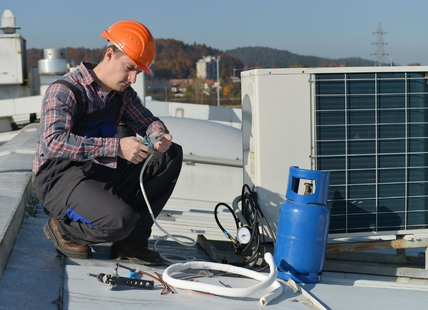
A room may receive weak airflow even when the central equipment produces the correct temperature. Ductwork repair for Castro Valley properties can address loose joints, crushed branches, leaking returns, damaged sections, and restrictive connections. Central HVAC repair may also be needed when blower operation or equipment transitions contribute to the distribution problem.

Preventive Performance Reviews
HVAC maintenance for Castro Valley properties examines filters, electrical connections, accessible components, thermostat response, drainage, airflow, and operating cycles. Residential HVAC service may reveal gradual changes before comfort declines noticeably. Thermostat installation, air conditioning repair, or furnace repair can then be scheduled separately when testing confirms a specific fault.
Frequently Asked Questions
Why does strong airflow reach one room but barely reach another?
The weaker room may have a restrictive branch, loose duct connection, closed damper, crushed section, blocked register, or inadequate return pathway. Airflow should be compared across the distribution system before changing blower settings or installing larger equipment.
Can HVAC equipment run correctly while the duct system wastes energy?
Yes. Supply leakage releases conditioned air before it reaches occupied rooms, while return leakage can draw unconditioned air into the system. Both conditions may increase runtime, create temperature differences, and make functional equipment appear undersized.
Why does my furnace heat normally and then shut down too early?
Early shutdown may result from restricted airflow, overheating, ignition loss, thermostat interruption, blower problems, or a safety-control response. The furnace should be observed through a complete cycle before a component is identified as the cause.
Is HVAC replacement necessary when only certain rooms feel uncomfortable?
Not necessarily. Room-specific discomfort often points to duct restrictions, inadequate returns, thermostat location, insulation differences, or airflow balancing. Replacement becomes relevant when testing also identifies insufficient equipment capacity, extensive deterioration, or repeated mechanical failures.
Can a new thermostat improve heating and cooling performance?
Thermostat installation can correct inaccurate sensing, poor scheduling, damaged wiring, or control compatibility problems. It cannot repair leaking ducts, weak blower operation, failed cooling components, or ignition faults, so the complete system should be assessed first.